Kitchen Layout Principles
A well-designed kitchen layout minimizes unnecessary steps and keeps your most-used zones within the work triangle.
Identify Your Work Triangle
Map the distance between sink, stove, and refrigerator. Ideal total distance: 4–7 meters.
Minimize Counter Crossings
Keep prep zone between fridge and stove — ingredients flow in one direction.
Stack Vertical Space
Use cabinet height efficiently. Most-used items at eye level, rarely-used items above.
Reduce Dead Zones
Corner cabinets and deep drawers kill workflow. Install pull-out systems or lazy susans.
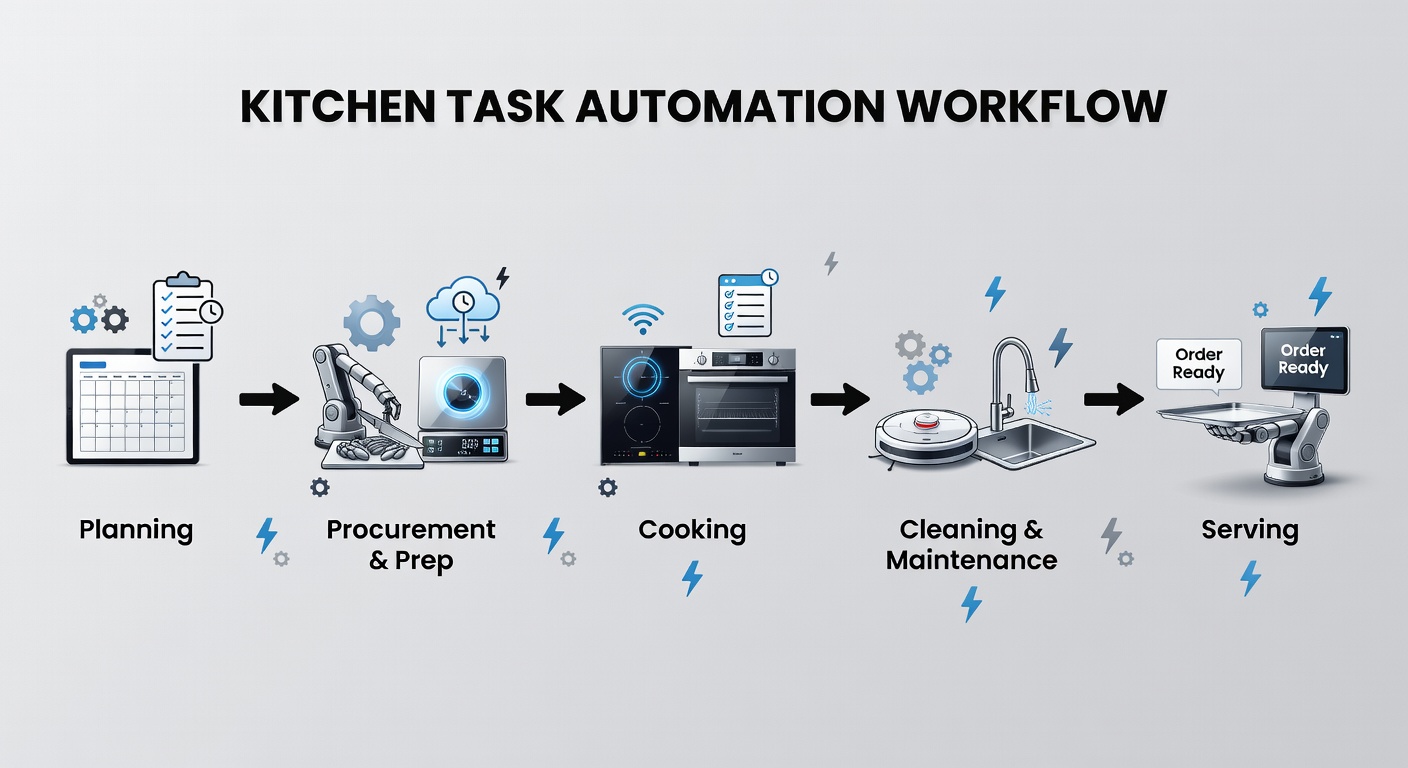

Adapting the Flow to Your Space
Whether you have a galley kitchen, open plan, or studio space — the flow map adapts to your reality. These principles scale down beautifully.
Small Kitchen Hacks
Use a rolling cart as a mobile prep zone. Magnetic strips replace knife blocks instantly.
Galley Kitchen Flow
Prep on one side, cook on the other. All motion is linear — incredibly efficient once optimized.
Open Plan Integration
Use an island as prep zone. Keep the triangle tight even when the kitchen opens to living space.